Why the New Customs Enforcement Order Is a Turning Point for Foreign Sellers on Amazon
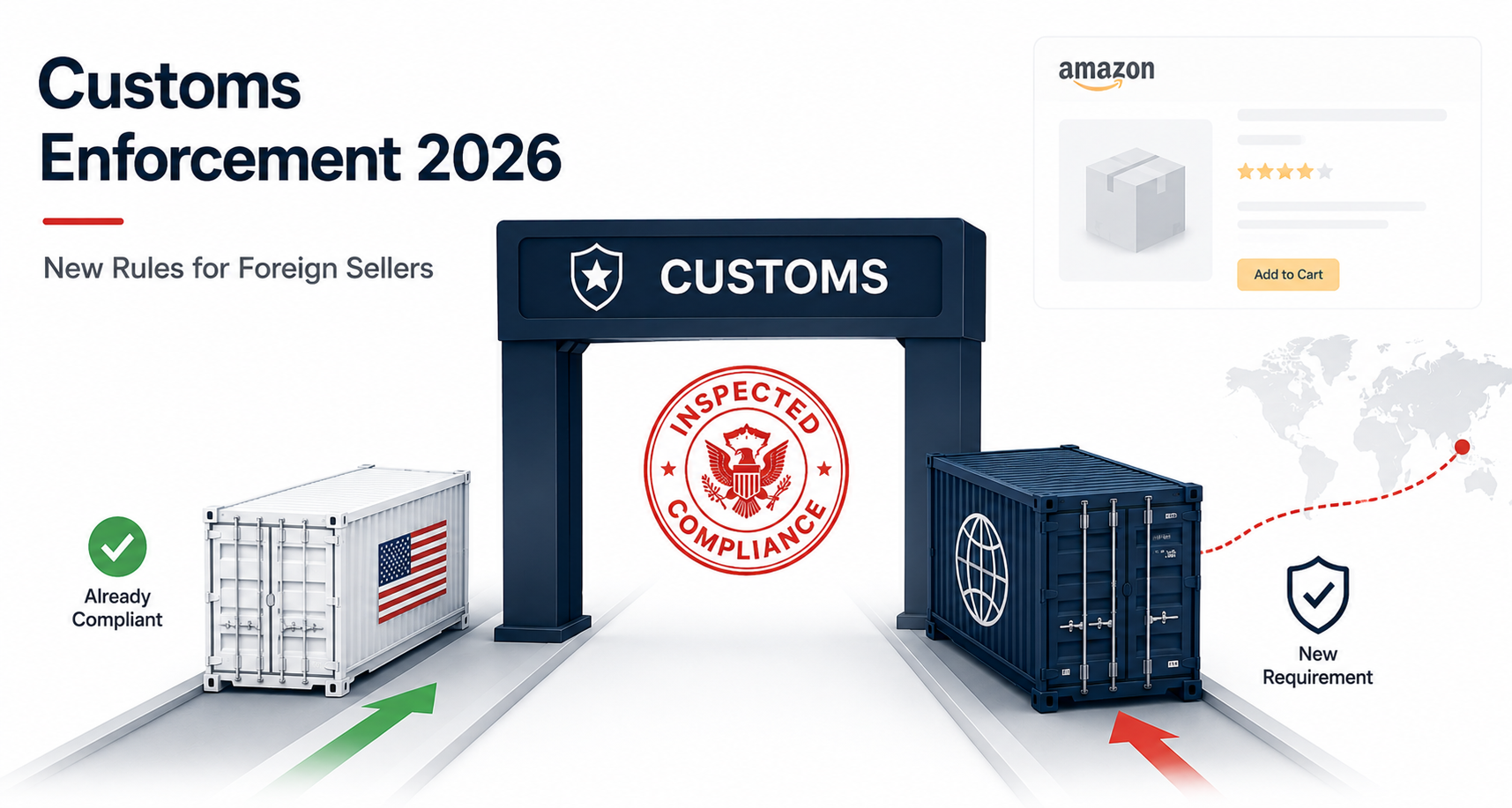
For years, the rules of e-commerce importing were quietly lopsided. A US-based seller had to register a business, hold a bond, file formal customs entries, and answer to the IRS. A foreign seller shipping the identical product could often skip most of that. On June 3, 2026, the White House signed an executive order titled "Strengthening Customs Enforcement," and that gap is now closing fast. For anyone who imports inventory to sell on Amazon, this is not background noise. It is the start of a structural shift in how foreign sellers on Amazon will be allowed to operate, and the compliance bar is about to rise for everyone in the supply chain.
The Accountability Gap Behind This Order
At the heart of this policy is one simple problem: foreign importers of record have rarely had to answer for anything. A company could list itself as the importer of record with no real presence in the country, no assets that customs authorities could ever seize, and no consequences if something went wrong. Undervalue a shipment, dodge a tariff, ship something unsafe, and the business could simply vanish and reopen under a new name the following month. American sellers never had that escape hatch. They built real businesses with real legal exposure, while a growing share of their competition operated with almost none of it.
The scale of that imbalance is worth pausing on. Foreign sellers held a modest slice of US marketplace sales back in 2017, and within less than a decade they came to represent more than half of all third-party sellers on Amazon, a shift well documented by marketplace research firms tracking seller origin data over time. A meaningful chunk of that volume has, by most industry accounts, moved through sellers paying little to no US income tax on the revenue. Combine that with weak customs accountability, and domestic sellers were effectively competing against a built-in cost advantage on the exact same products. This executive order is the federal government's most direct attempt yet to close that advantage, and it does so by tightening customs enforcement at every stage of the import process.
What the Executive Order Actually Requires
The order directs the Department of Homeland Security and US Customs and Border Protection to rebuild importer of record requirements in stages, each with a firm deadline. Within 90 days, agencies must revise penalty structures, foreign export documentation rules, and disposal procedures for noncompliant goods. Within 180 days (landing around late November 2026) the bigger structural changes take effect: minimum tangible US asset and bonding requirements for every importer of record, a formal "good standing" framework, enhanced vetting, and an overhaul of the importer registry itself. A separate 45-day clock requires the Secretary of Homeland Security to hand Congress legislative recommendations for even stronger enforcement tools.
In practice, every importer of record will need a baseline of real, seizable US assets behind their operation, not just a bond on paper. Foreign importers are being pushed out of the "informal entry" lane that previously let lower-value shipments through with minimal documentation. They will now need to file formal entries, post adequate bonds, and either pass vetting through a program like CTPAT or route shipments through a validated US customs broker. Ownership disclosure is tightening too. Importers must reveal who actually controls the business, expected shipment volumes, and what US assets stand behind it, which makes it far harder to hide behind a shell entity and relaunch under a new name once enforcement catches up. On the penalty side, the order sets a floor of at least 50 percent of the assessed penalty in most cases, removes mitigation options for repeat offenders, and speeds up seizure and disposal of noncompliant goods. Brokers who enable violations face maximum penalty exposure as well. Undervaluation, transshipment, and misclassification have functioned for years as a low-risk strategy, and tighter customs enforcement is designed to make that strategy expensive again.
How Different Sellers Will Feel This
The impact is not evenly spread, and that is by design. US-based FBA sellers and wholesale importers who already file formal entries through a US entity, hold an EIN, and carry a bond will feel almost no new burden. If anything, this order finally pulls foreign sellers on Amazon up to the compliance standard domestic sellers have always had to meet.
Foreign sellers using Fulfillment by Amazon are in a different spot. They now need real US assets, proper bonding, disclosed ownership, and either CTPAT-style vetting or a validated US customs broker handling their entries. Their cost structure and accountability are both rising toward parity with domestic competitors, which is exactly the intended outcome.
The businesses that will feel this hardest are the ultra-low-cost, direct-from-China dropship operators, the model popularized by platforms like Temu and Shein. That model already lost one major advantage when the de minimis exemption for low-value shipments closed in 2025. Now the informal entry lane, the second pillar it relied on, is being removed too. Per-parcel imports under this structure are about to get slower, costlier, and far more documented. A model built almost entirely on speed and minimal friction is losing both legs it stood on within about a year.
There is a simple way to gauge where any seller lands on this spectrum. The more a business depended on moving goods cheaply with little oversight, the harder this order hits. The more a business already runs like a fully documented, asset-backed US company, the more it benefits from a higher floor applied to everyone else.
What Sellers Should Actually Do Now
The right move depends on how you're currently importing, so it helps to think in terms of your specific setup rather than generic advice to "review compliance."
If you're an Amazon FBA seller using your own US entity and broker, your immediate task is verification, not overhaul. Pull your current bond amount and confirm it sits above any minimums likely to emerge from the 180-day rulemaking, check that your EIN and business registration details match exactly across CBP filings and your Amazon seller account, and ask your broker directly whether they're already adjusting client onboarding for the new vetting standards. A mismatch here that goes unnoticed for years can suddenly become a flag once scrutiny increases.
If you are sourcing via a 3PL that functions as your importer of record, make sure you get the details down in black and white. Find out if they have CTPAT status or if they intend to get it; find out what U.S. assets they have behind their ability to bond, and find out if your shipments would be considered "foreign-importer" entries under the new system. If they can’t answer the questions, then they become your problem.
If you import directly from an overseas factory and use a foreign entity as importer of record (a common setup for sellers who manufacture in China and ship straight to Amazon's warehouses), this is the structure facing the most disruption. Start pricing out what it would cost to either establish a US-based importing entity with adequate domestic assets or formally transition the importer of record role to a validated US customs broker before the 180-day deadline arrives. Waiting until the rule is finalized to start this conversation will likely mean scrambling during peak shipping season.
The Bigger Picture
This executive order isn't really about punishing foreign sellers on Amazon for existing. It's about closing a loophole that let a large and growing share of e-commerce volume operate with less accountability than domestic Amazon compliance has always demanded. Foreign sellers could undercut US competitors partly on product cost and partly on regulatory arbitrage, and that second advantage is now being dismantled through asset requirements, ownership disclosure, and penalties no longer cheap enough to shrug off. How completely this closes the gap depends on how aggressively CBP enforces it once rulemaking finishes, but the direction itself isn't really in question anymore. The informal, low-accountability import model that powered a decade of cheap, fast e-commerce growth is being phased out, and sellers who adjust before the 180-day window closes will be the ones still standing once it does.
Ready to Grow on Amazon?
Let our experts help you scale your Amazon business with proven strategies.
Get a Free Consultation