Amazon's New Importer of Record Notice: What US Importing Sellers Need to Know
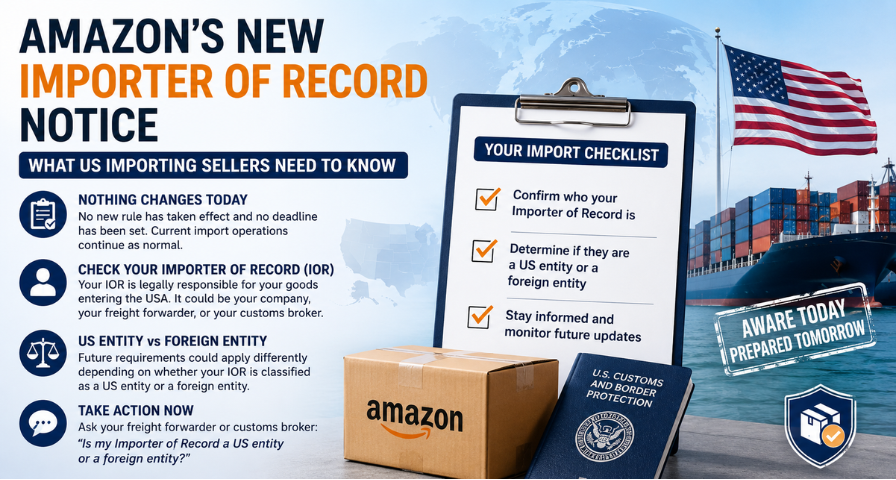
Are you an Amazon seller importing items to the US? If so, then you have likely received a new message from them, asking you to review the status of your Importer of Record. You may be tempted to file away this compliance notice and mark it as another routine email that can be filed in your archives. Considering the focus that has been on US customs enforcement recently, however, you should definitely take some time to pay attention to this particular notice. Not because anything has changed right now – no new regulation was implemented, and no deadlines were established. Just because Amazon wants their sellers to know about the coming changes.
Why Amazon Is Raising This Now
This announcement from Amazon follows a period where there have been increased calls for changes in import laws within the US, as well as increased interest from various regulatory bodies and industry analysts into the laws that govern the importer of record. This is important and needs to be stated. The announcement from Amazon doesn’t refer to any one piece of legislature or executive decision, and sellers should not assume that it does. What can be said is that the larger environment surrounding customs regulations is getting increasingly complicated, with discussion regarding the need to make import laws stricter and close gaps that previously existed within the import system. It seems as though Amazon is getting ahead of potential changes by asking sellers to know their import structure before anything else.
Understanding the Importer of Record
The Importer of Record, or the IOR, is an organization that is legally accountable for compliance with all laws regarding the products being imported into the U.S. The IOR also ensures that all necessary duties and taxes have been paid. This isn't a symbolic title. The IOR carries real legal liability, and if something goes wrong (misclassified goods, underpaid duties, missing paperwork), it's the IOR who answers to customs authorities, not necessarily the seller's brand or the marketplace they sell through. A common misconception among Amazon FBA sellers importing inventory into the US is that Amazon itself takes on this responsibility. It does not. The IOR may be the seller's own company, or it may be another eligible party the seller has designated for that role. It's worth being careful here too. A freight forwarder or customs broker may assist with shipping and customs clearance, but their involvement in that process doesn't automatically mean they are the Importer of Record. That designation is a specific legal arrangement, and it's entirely possible to work with a broker for years without ever confirming exactly who holds that responsibility.
The US Entity vs. Foreign Entity Distinction
This is the crux of what Amazon wants you to determine from the notice. Is your importer of record being treated as a US entity or a foreign entity? Amazon says that there will be certain future requirements that will vary based on your classification as a US entity or a foreign entity. However, it must be noted that the details of how this variation is going to work are yet to be determined by Amazon. If your IOR is treated as a US entity, then the chances are that you will be in a comparatively simple situation based on the final regulations. However, if your IOR is treated as a foreign entity, then the implications of the future rules entirely rest on how those rules are finally written.
Why This Matters
It's tempting to dismiss notices like this because they don't come with an immediate action item beyond "go check something." But that's exactly the point. Import compliance issues rarely appear out of nowhere. They tend to surface when a business discovers, often during an audit or a shipment delay, that it never actually confirmed who was legally responsible for its goods. Many sellers set up their supply chain years ago and simply assumed their freight forwarder or customs broker had it handled, without ever asking the direct question. Given that future requirements could apply differently depending on IOR classification, sellers who don't currently know their own status could find themselves reacting under time pressure later instead of planning calmly now. Amazon flagging this while there's no urgency attached gives sellers room to investigate on their own timeline.
What Sellers Should Actually Do
The practical step here is refreshingly simple, and it's really the whole point of this article. Contact your freight forwarder or customs broker and ask directly: is my importer of record a US entity or a foreign entity? IOR information is generally reflected in customs entry and importer registration records, so whoever manages your shipments should be able to confirm which entity is currently listed. If you're not sure who your designated IOR even is, that's worth clarifying first, since it might be your own company, your logistics partner, or a third party appointed specifically to carry that liability on your behalf. Once you have an answer, you're not obligated to do anything else immediately. If it turns out your IOR is a foreign entity, the right response is not panic or an immediate restructuring of your supply chain. The goal right now is visibility, not action. Knowing your exposure means you'll be positioned to make informed decisions once actual requirements are finalized, rather than discovering your risk profile after the fact.
A Broader Pattern Worth Watching
This notification can be considered part of the more extensive trend that should be kept in mind by Amazon sellers and, to a certain extent, all participants of cross-border e-commerce. Customs regulations and compliance requirements for imports into the US have changed in the last couple of years, and the general situation has become less tolerant regarding documentation and liability for imported items. If one neglects customs compliance, thinking that it is the concern of the vendor and his logistics department, then he just exposes himself to risks since liability is placed on the business in question, not on those who handle the logistics for him. This process does not require becoming an expert in customs procedures. One just needs to ask some relevant questions occasionally and maintain appropriate documentation.
Key Takeaway
For any seller relying on cross-border fulfillment, the smart move is to treat this notice as an invitation to answer one question before it becomes urgent: is your importer of record a US or foreign entity? That single conversation with your freight forwarder or customs broker costs you almost nothing now, and it puts you ahead of whatever final rules eventually take shape. Find out who your IOR is, confirm whether that entity is US or foreign, and keep watching for how the final requirements develop. No panic, no unnecessary restructuring, just better visibility into your own import setup.
Ready to Grow on Amazon?
Let our experts help you scale your Amazon business with proven strategies.
Get a Free Consultation