Amazon SEO in 2026: Why Your Listings Aren’t Ranking (And What Changed)
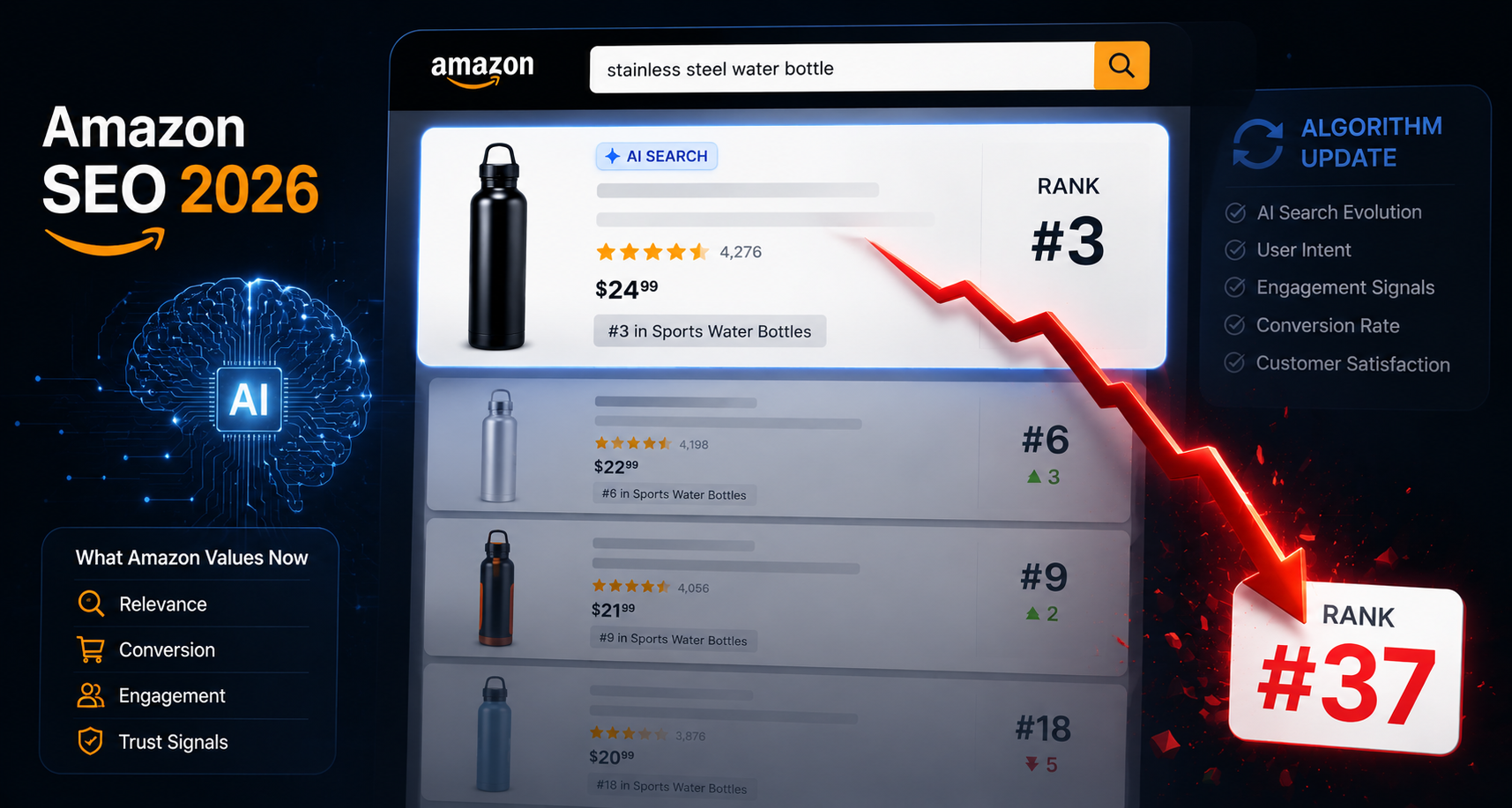
Amazon SEO Has Changed, and Most Sellers Haven't Caught Up
The approach to Amazon SEO needs to change. The former one, which was based on keyword insertion within titles, bullets, descriptions, and back-end fields has lost its relevance. What Amazon is looking for in 2026 is a product that customers will see, click, trust and purchase.
It is there that a lot of sellers run aground. They still believe in inserting numerous keywords while their actual problem is their listing. Why doesn't your listing rank in spite of the correct keywords? In most cases, it happens because of poor pictures, vague titles, plain bullets, negative reviews, lack of competitiveness, and absence of product data.
Amazon SEO in 2026 presupposes the creation of the listing that Amazon will understand, AI tools can comprehend, and buyers are ready to trust. Moreover, Amazon is evolving towards a new approach to AI-assisted shopping and is combining all such efforts under Alexa for Shopping brand. It implies that sellers should move further beyond the use of short keyword phrases. The listings that will become winners in 2026 will have clear information on the essence, target audience, problem solved by the product, and reasons to purchase it.
Why This Matters Right Now
As an Amazon seller, you know this feeling all too well: You optimize your title, put all the keywords in your bullet points, and suddenly you’re outranked by someone whose listing seems to be less optimized. It's not your bad luck; Amazon has recently made a significant update in its approach to product titles that will require a lot of sellers to reconsider their listing writing strategy, and learning about it before the implementation date will be the only thing that saves you from dropping off the charts.
So, how does Amazon rank its products in 2026? Let’s find out together.
1. Relevance Is Just the Entry Ticket, Not the Win
Both the listings could have the same set of keywords such as 'stainless steel water bottle' and yet appear on drastically different spots. This is because when Amazon determines that the listing is relevant enough, then comes the next vital question, which of these relevant items is likely to get bought? It all depends on the sales records, customer feedback, quality of images, and health of the product listing as a whole. An item with zero sales, ratings, and vague product name won’t perform well even if it has lots of keywords.
2. Amazon's Algorithm Works in Stages
So how does Amazon decide which product shows first? Its ranking system (often called A9/A10 by sellers) moves through a process. First, it tries to understand what your product actually is, pulling information from your title, bullets, backend terms, images, and reviews. Then it matches your product to relevant searches and ranks based on which one is most likely to satisfy the shopper. Finally, it keeps learning from real behavior over time: sales velocity, returns, repeat purchases. Skip any stage, like leaving your title vague, and Amazon simply has less to work with.
3. Three Signal Groups Decide Your Position
The power of your listing's ranking is derived from these three groups working together. The relevance indicators such as title, bullet points, backend keywords, and the category help Amazon know what your product is all about. Performance indicators like click-through rate, conversion rate, velocity of sales, and returns tell Amazon how customers respond to your listing. Authority indicators like brand reputation, external traffic, and historical performance tell Amazon whether the product has gained any authority over time.
4. Big Policy Change: Titles Are Shrinking, and Item Highlights Is the New Field You Need to Know
This is the part most sellers are underestimating right now. Amazon is rolling out a major title policy change, with many categories moving toward a 75-character cap starting July 27, 2026, including spaces. That's a significant cut for sellers used to titles running well past 100 characters, since some categories previously allowed up to 200.
In addition to this, Amazon is developing a new concept of item highlights, an extra 125 characters of content appearing just under the title in search results and in the product listing. This feature targets the type of data that doesn't fit into a truncated title – the materials, features, or applications of the item. So, instead of forcing into the title such wording as "non-binding cotton diabetic socks for neuropathy with seamless toe and moisture-wicking fabric," one can shorten the title but keep all the other relevant information in Item Highlights.
Now let us take a look at the disadvantages of postponing the process of optimizing titles. You can keep your existing title until the deadline or shorten it now and start using Item Highlights early. But if your title is still over the limit after the cutoff, Amazon rewrites it using its own AI recommendation. Your listing stays active, and brand owners get a review window to check those changes, but by then you've lost control over your single most important ranking asset. The sellers who come out ahead are the ones rewriting their own titles, on their own terms, before Amazon does it for them.
5. Bullets and Images Now Carry More Weight
Since you can fit less in your listing title, the bullets and pictures have to work harder. The bullets need to convey benefits and uses in concrete ways and not with fluffy statements such as “high-quality product.” Pictures are just as important – the key picture, lifestyle shots, sizing shots, and even infographics all add up to increased customer confidence before a word is read. When customers consistently refer to one aspect of your product, say, keeping coffee warm for 12 hours, you must highlight that feature as well.
6. Price and Reviews Tell Shoppers Whether to Trust You
It does not guarantee that clicks will be made because of price alone. Price is compared to image quality and the star rating to assess whether it's worth spending more on an item that uses higher quality material or includes additional features and accessories. Similarly, reviews work like this; buyers find products that have detailed reviews more comforting than products without many reviews. Be sure to focus on what customers tend to say again and again.
7. Keyword Research Needs Strategy, Not Volume
The best way to perform keyword research is to begin with seed keywords, and from there, extend your research using reverse ASIN keyword research and long-tail keywords (more specific keywords like "durable lightweight backpack with front utility pocket"). There are tools, such as Amazon Brand Analytics and Search Frequency Rank, which can be used to verify which keywords would be worth targeting. With shrinking title lengths, this is especially important since you must make a choice regarding which keyword to place in the title and which not to include.
The Listings That Win From Here Aren't the Ones With the Most Keywords
They're the ones built around a simple test most sellers ignore: Does this page make Amazon, AI shopping tools, and real buyers reach the same conclusion, that this is the right product to buy? If your title is still bloated, your bullets are still vague, and you're waiting for the deadline to decide what happens to your listing, you've already handed that decision to someone else. The sellers who treat this update as a deadline to control, not a problem to ignore, are the ones who'll still be ranking on page one when everyone else is wondering what happened to their traffic.
Ready to Grow on Amazon?
Let our experts help you scale your Amazon business with proven strategies.
Get a Free Consultation