Amazon Reopens FBA for Meltable Products: What Sellers Need to Know Before Q4
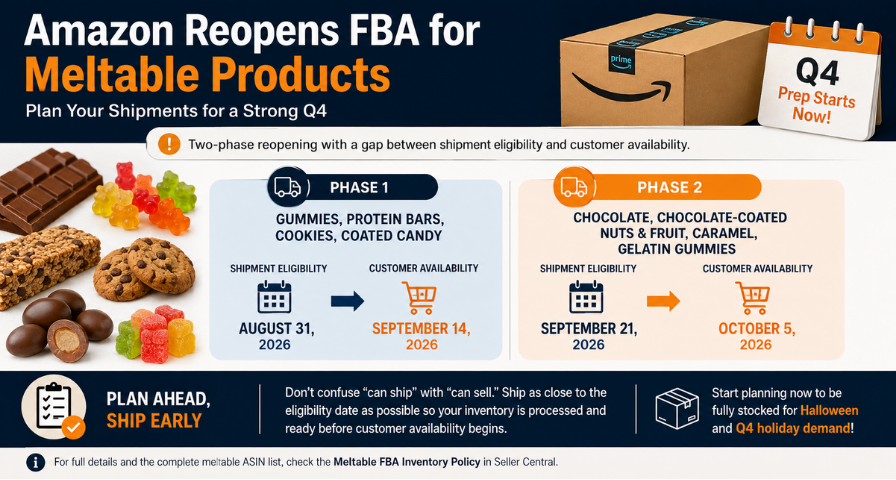
The good news is that Amazon has reopened its FBA fulfillment for meltable products, but all of them do not come back at once. On August 31st, sellers may start sending gummies (coated & pectin), protein bars, cookies, and coated candies to FBA, with customer availability from September 14th. Chocolate, chocolate-coated nuts and fruits, caramel, and gelatin gummies come back on September 21st, customer availability starts on October 5th (all the details and the whole list of meltable ASINs are available in Seller Central Meltable FBA Inventory Policy). If you work with the mentioned categories, then two phases and a gap between shipment eligibility and customer availability dates are the key points that define your packaging plans and inventory planning during the coming weeks.
In order to avoid any confusion here, it is better to clarify two terms. The shipment eligibility date is when sellers may start sending their products to FBA. The customer availability date is when these products will be available for customers on Amazon. It is worth mentioning that those two dates are different, and confusing them may become an easy way to get your Q4 timeline wrong.
Why Amazon Restricts Meltable Inventory in the First Place
Amazon's policy defines meltable inventory as products that can melt when exposed to prolonged high temperatures, commonly referenced around 155°F. The restriction exists to reduce the risk of these products being damaged during storage and fulfillment, since heat exposure can cause chocolate, gummies, and similar items to lose shape, texture, or quality before they reach a customer. This applies broadly across the meltable ASIN list and is a standard quality control measure rather than something specific to any one seller or brand.
The Two-Phase Reopening and Why the Dates Matter
Amazon has divided this reopening into two product groups, with the first group reaching customer availability earlier than chocolate and the other products in the second phase. Gummies, protein bars, cookies, and coated candy become shipment eligible on August 31, but customer availability doesn't begin until September 14. Chocolates, chocolate-covered nuts and fruits, caramels, and gelatin candies qualify for shipment eligibility from September 21st, while customer availability will commence from October 5th. Due to the fact that Amazon has distinguished between the shipment eligibility date and the customer availability date, the sellers have to incorporate this difference in their inventory and logistics plans.
That distinction is really the central thing to understand about this announcement. It's tempting to read "FBA reopens August 31" and assume listings will be live and selling that same week. In reality, sellers who ship as close to the eligibility date as possible give themselves more time for inventory to move through the fulfillment process before customer availability begins, which matters a great deal once demand starts climbing in late September and early October.
Why the Timing Matters for the Season Ahead
For many Amazon sellers, Q4 is one of the most important selling periods of the year, particularly for food, candy, gifting, and seasonal products. Halloween candy, holiday gift boxes, stocking stuffers, and gourmet chocolate gifting all peak in the weeks immediately following these customer availability dates, which leaves a fairly thin margin for error on shipment timing. A seller who waits until mid-September to send in gummies or protein bars, assuming there's plenty of runway before the holidays, may find their inventory still working through the fulfillment process just as demand starts to climb. A delayed launch can also mean missing early sales and advertising opportunities, along with the momentum that comes from having inventory available right as seasonal demand starts increasing, rather than catching up once it's already underway.
Building a Shipment and Inventory Plan Around Both Dates
The most useful question here isn't "when can I send inventory?" It's "When do I need inventory available for customers, and when do I need to ship it to make that happen?" That reframing changes how the planning should work. If gummies, protein bars, cookies, or coated candy make up a meaningful share of your catalog, shipments should be ready to go as close to August 31 as possible so inventory is fully processed well ahead of the September 14 customer availability date. If chocolate, caramel, or gelatin gummies are a bigger part of your business, the extra three weeks before September 21 are worth using to finalize packaging and confirm your ASINs are correctly classified under Amazon's meltable list.
It also helps to think through the full chain from current inventory to expected demand. Start with what you already have in FBA or in reserve, factor in your average daily sales rate, layer in the increase you expect once Q4 demand kicks in, and then work backward through your production or shipping lead time to figure out when a shipment actually needs to leave your warehouse. Because customer availability lags shipment eligibility by roughly two weeks in both phases, that lead time calculation needs to be anchored to the customer availability date, not just the earlier date FBA starts accepting inventory. Sellers who reverse-engineer their shipping schedule from September 14 or October 5, rather than from the shipment eligibility dates alone, tend to end up with a much more realistic timeline.
This is also a great time to evaluate the performance of any listings that may be inactive or partially active throughout the limited window. Pricing, photos, and inventory settings are likely to become outdated after several months, and an unmaintained listing is not going to perform as well when the demand resumes. Those sellers who are using the seller-fulfillment or third-party fulfillment service during the off-season must prepare for a seamless switch to FBA.
Final Thoughts for Sellers Preparing for Q4
The reopening of FBA for meltable products gives sellers a clear runway into the holiday season, but the value of that runway depends on how it's planned. For meltable products, Q4 inventory planning should start with the customer availability date and work backward, not with the date Amazon begins accepting shipments. Get that sequence right, and there's a real opportunity to have listings fully stocked and ready well before Halloween and holiday demand peaks.
Ready to Grow on Amazon?
Let our experts help you scale your Amazon business with proven strategies.
Get a Free Consultation