Amazon Is Splitting Your Titles: What Sellers Need to Know Before July 27
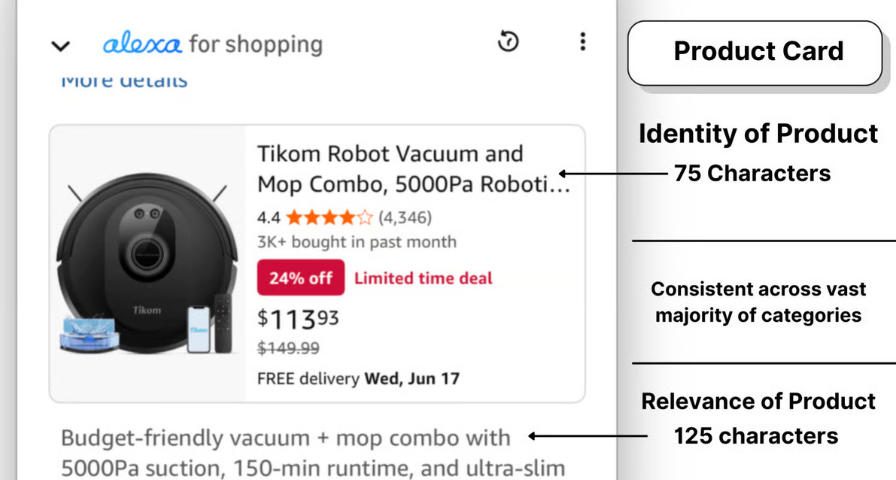
If you sell on Amazon, mark July 27 on your calendar. This is the date Amazon rolls out one of the most significant listing changes in years: Amazon title splitting. Instead of one long title field, every listing outside the media category will now be broken into two distinct parts, a 75-character Product Name and a new 125-character Item Highlights field. For context, Amazon product titles used to run as long as 200 characters. That's not a small trim. That's a fundamental shift in how product identity and product relevance get communicated, both to shoppers and to Amazon's own systems.
The new format is already appearing on mobile across parts of Amazon's marketplace, which means this isn't a distant policy update buried somewhere in Amazon Seller Central. It's live, it's rolling out wider, and sellers who wait until the last minute to react are going to find themselves scrambling. Amazon confirmed the rollout directly in its official Seller Forums announcement, stating that starting July 27, 2026, titles in all categories except media will need to be 75 characters or less, including spaces with Item Highlights offering an additional 125 searchable characters.
What Exactly Is Changing
The update itself is simple, but its impact reaches far beyond a shorter title. Your single title field is being divided into two purpose-built fields. The product name, capped at 75 characters, is meant to carry identity. It answers the most basic question a shopper has: what is this thing?
The Item Highlights field, allowing up to 125 characters, carries relevance. This is where use case, standout features, materials, and the actual reason someone should buy the product now live.
Both fields still feed into Amazon search ranking and indexing, so this isn't a cosmetic redesign where text just got moved around for looks. It's a restructuring of how product data lives on the Amazon product detail page. A title that used to do everything at once (identity, keywords, features, and persuasion all crammed into one line) now has to be split intelligently across two fields with very different jobs.
Why Amazon Is Making This Move
To understand this update, it helps to think about where shopping actually happens now. A growing share of Amazon traffic comes through mobile devices, where screen space is limited and attention spans are short.
On a mobile product card, 75 characters is roughly the sweet spot for a shopper to recognize what a product is at a glance, without wading through a wall of keyword-stuffed text.
There's also a voice commerce angle a lot of sellers are overlooking. Amazon has been investing in Alexa for shopping and Echo-based purchasing, and voice interfaces don't work well with 200-character keyword soup. A short, natural-sounding product name is something Alexa can read aloud without stumbling through a spec sheet.
The 125-character Item Highlights field becomes the layer Alexa can pull from when a shopper asks a follow-up question about fit, use case, or features.
Titles that are long and full of keywords have always helped with indexing and hindered comprehension by humans, especially on smaller screens. The move is also in line with what Amazon is doing in terms of structured product data and voice-based shopping. Moving down this path, product pages begin to behave more like structured data than destinations in their own right data that can be used by other systems and even shopping assistants that will come later.
The Part That Should Actually Worry You
But here's where things get really interesting. Amazon has stated that listings that fail to keep up may undergo automatic modifications, including auto-created product titles generated by artificial intelligence.
Now on paper this seems fine, but in reality, this can lead to gradual decline in terms of sessions, search rank, click-through rate, and conversions as the algorithm fails to understand what is important about your product. It would definitely be unwise to put such a risky job in the hands of an algorithm, particularly on your hero ASINs, those which bring you the bulk of income.
In any case, this is one of those changes that require being proactive rather than reactive, and you can lose months of work trying to restore your rankings in case they have been lowered because of an automatic rewrite of your titles.
It does not mean, of course, that now Amazon SEO is over and keywords are no longer relevant. The only thing that has changed in this respect is title dependence. Formerly, only a title could provide all SEO benefits needed by a listing.
Now, identity has to work harder within a tighter 75-character limit, and relevance has to work harder within the 125-character Item Highlights space. Everything else in your listing, including bullet points, backend search terms, attributes, images, A+ Content, reviews, and price, still plays a supporting role in how Amazon's product graph ranks and surfaces your items. The foundation of Amazon listing optimization hasn't disappeared, it's just being redistributed.
How to Write Item Highlights That Actually Work
This is a relatively new concept for many sellers, and it’s worthwhile considering what makes an effective item highlight. The item highlight concentrates on one or two customer benefits as opposed to using keywords that are already mentioned in the product title.
The material, compatibility, comfort, durability, sizing, and application are all more useful than adding an additional definition of the product type. The product name “Stainless Steel Water Bottle” does not require another definition of the product type, such as “stainless steel bottle," in the item highlights. The available space can be used more effectively by saying “keeps drinks cold for 24 hours, features a leakproof lid, and fits standard cup holders.”
The item title is a response to "What is it?" while item highlights are the answers to "Why should I care?" The approach to writing the product title and item highlights with this difference in mind is the main opportunity of this update.
What Sellers Should Do Before July 27
The best thing for us to do right now would be to approach it as an experiment rather than a mad rush. We'll start with split testing the new format using less important products, the ones not making us much money.
This gives you a low-risk way to see how the new product name and item highlights structure behaves in search results and on mobile cards before you touch anything that matters. Once you understand the pattern, you can apply those lessons with confidence to your top-performing listings.
Resist the temptation to let Amazon's Listing Enhancers make these decisions for you, even on the products you're testing. Automated tools are useful for suggestions, but the judgment about what belongs in identity versus relevance should stay with someone who understands the product and the customer.
When it comes to writing your content, remember that descriptive, benefit-focused terms such as "leak-proof," "dishwasher safe," or "no metallic taste" are just the kind of information that should go into your Item Highlights field.
Your product title, meanwhile, should remain focused: only your main keyword and a description of what your product is, period.
Final Thoughts
The issue of Amazon title splitting goes way beyond some simple formatting. The world of e-commerce is moving towards mobile-first, voice commerce, and AI-based shopping, and the need for structured product information is growing, and Amazon is changing its approach to titles in response.
Those sellers who consider July 27th a genuine deadline, experiment at an early stage, and do a thorough job of separating identity and relevance components will secure their listing ranking and conversion rate. Those who don’t will give away the power over their best listings to an algorithm.
This change in the Amazon approach doesn't mean less writing, but better organization of content. Those who realize it will be ahead of others when Amazon search moves further beyond keywords.
Ready to Grow on Amazon?
Let our experts help you scale your Amazon business with proven strategies.
Get a Free Consultation