Amazon Holiday Deals 2026: What Sellers Need to Know Before the Rush Begins
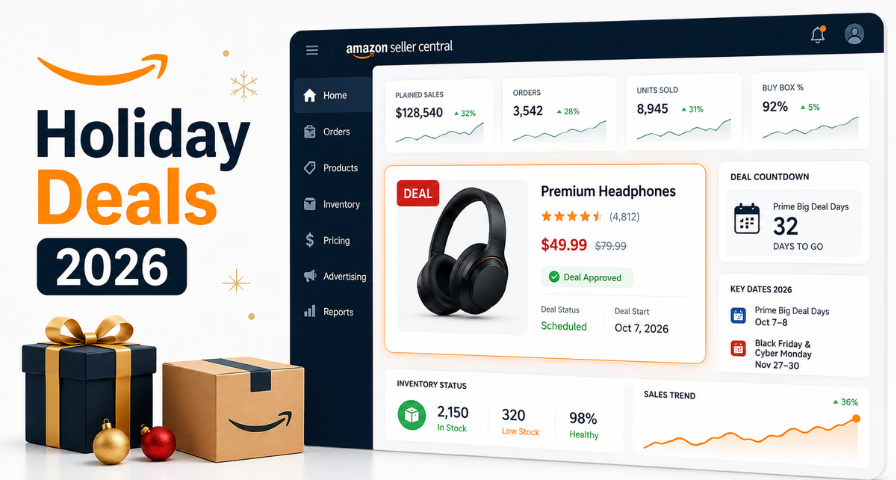
The holiday shopping season comes around every year before sellers are prepared, but even in 2026 this will be true. It was announced recently by Amazon that the company has begun accepting applications for the Amazon Holiday Deals 2026 program, providing all sellers with sufficient time to plan, price, and prep for the year's most important shopping periods – Prime Big Deal Days and Black Friday/Cyber Monday. If you have any Amazon listings via FBA or FBM channels, this is your time to get started, as there are serious monetary stakes involved along with regular deadlines.
In this article, we will examine changes in this year's program, the most important deadlines, and why it is crucial to get started earlier in 2026 with special consideration of holiday peak fulfillment fees.
Why Early Submission Matters More This Year
Amazon has structured its 2026 holiday deal calendar around two major shopping windows, and the submission process for each comes with a built-in reward for sellers who move quickly. For Prime Big Deal Days, sellers who submit their deals by September 8 will be included in the promotion, but those who submit earlier, by August 5, save $50 on the promotion fee. The same pattern applies to Black Friday and Cyber Monday deals. The general submission deadline is October 20, but sellers who get their submissions in by September 5 also save $50.
This is no small benefit. The more SKUs and promotions one is doing, the more valuable it becomes. What is even more important is that earlier submission gives better chances of gaining visibility during the internal reviewing process at Amazon, as applications submitted closer to the deadline often compete for limited reviewing capacity. Those who submitted their applications last week are often required to go back and forth through the reviewing process, leaving them less time to create listings, creatives, and stock.
In case someone is working on holiday marketing campaign plans, now would be a good time to start it.
Understanding the Two Key Deal Windows
Prime Big Deal Days has developed into one of the trademark mid-year Amazon promotions that occur in October, operating like a mini version of Prime Day just ahead of the holiday shopping season. This is the time when sellers experiment with their pricing models, clear out older products, and prepare themselves for the upcoming holiday season. At the same time, being held earlier than Black Friday and Cyber Monday, it provides them with an opportunity to see what customers think about their pricing and promotional campaigns before the huge season starts.
As for Black Friday and Cyber Monday, they continue being some of the most anticipated days of the year. It is at this time when people schedule their shopping plans, and Amazon takes care of that, giving its homepage and search page priority to those sellers who correctly applied for participation in the event. The deadline for Black Friday and Cyber Monday is October 20th (September 5th if it is for a reduced fee). One month of buffer time may seem enough, but there are inventory issues related to it.
The Inventory Deadlines You Cannot Afford to Miss
Submitting a deal is only half the equation. If your inventory does not physically arrive at Amazon's fulfillment centers in time, the deal itself becomes irrelevant, since Amazon cannot fulfill orders for products that are not in stock. For most FBA sellers, inventory tied to Prime Big Deal Days needs to reach Amazon's warehouses by September 16, while inventory for Black Friday and Cyber Monday needs to arrive by October 28.
These dates matter because FBA inventory windows are not the same as shipping windows. Sellers often underestimate how long it takes for shipments to clear receiving, especially during a period when warehouses are already handling increased volume from other sellers preparing for the same events. A shipment that leaves a supplier's warehouse in early September might not actually be checked in and available for sale until well past the ideal date if there are delays at the port, during transit, or within Amazon's own receiving process.
That’s precisely why the more experienced sellers incorporate a gap of about two to three weeks after the deadline specified. In case the deadline for your inventory on the Prime Big Deal Days is September 16th, then early September should be taken as the real deadline for the same reason.
The New Holiday Peak Fulfillment Fees
However, one of the major changes in terms of operations for 2026 will be the imposition of holiday peak fulfillment fees. During the period from October 15, 2026, until January 14, 2027, there will be an extra fee added to each item that will range around $0.32 per unit to the currently charged fuel and inflation surcharge.
It is important to mention that it has been Amazon's long-running practice to increase fulfillment cost during the peak shipping months to compensate for increased labor cost, increased transportation demands, and an overall increased number of units processed through the warehouses. Although it may seem not a significant figure to pay for the product – $0.32, it becomes important when there is talk about processing thousands of units per day.
Sellers need to factor this fee into their pricing models now, rather than discovering the impact after the season starts. If a product is already being discounted for Black Friday or Cyber Monday, stacking a higher fulfillment fee on top of that discount without adjusting the base price or promotional depth could quietly erode margins across an entire product line. Running the numbers ahead of time, ideally before finalizing deal submissions, gives sellers a clearer picture of what a "successful" holiday promotion actually needs to look like in terms of volume and pricing.
Building a Realistic Holiday Timeline
Given all of this, the smartest approach for sellers is to work backward from the inventory deadlines rather than forward from today's date. Start by identifying which products will be part of Prime Big Deal Days and which will be reserved for Black Friday and Cyber Monday, since trying to push the same SKUs into both events without enough inventory can create stockouts at the worst possible time. From there, calculate how long your supply chain realistically takes, including manufacturing, shipping, and Amazon's receiving process, and set your internal shipping deadline well ahead of Amazon's official inventory dates.
It is also worth reviewing your pricing strategy in light of the new peak fulfillment fees before submitting deals, rather than after. Adjusting margins upfront is far easier than trying to course-correct mid-promotion when a deal is already live and visible to shoppers.
Key Takeaways for Sellers
The 2026 holiday season rewards sellers who plan early. Submitting deals ahead of the discounted fee deadlines saves real money, and hitting inventory deadlines with a comfortable buffer protects against the logistics delays that tend to pile up during peak shipping months. The new holiday peak fulfillment fees add a fresh layer of complexity that should be factored into pricing decisions now, not discovered later as a surprise cost. Sellers who treat this timeline seriously, mapping out submissions, inventory shipments, and updated pricing well in advance, will be in a far stronger position to make the most of Prime Big Deal Days and the Black Friday and Cyber Monday rush when it finally arrives.
Ready to Grow on Amazon?
Let our experts help you scale your Amazon business with proven strategies.
Get a Free Consultation