2026 Ecommerce Strategy: The Numbers Behind This Year's Holiday Shoppers
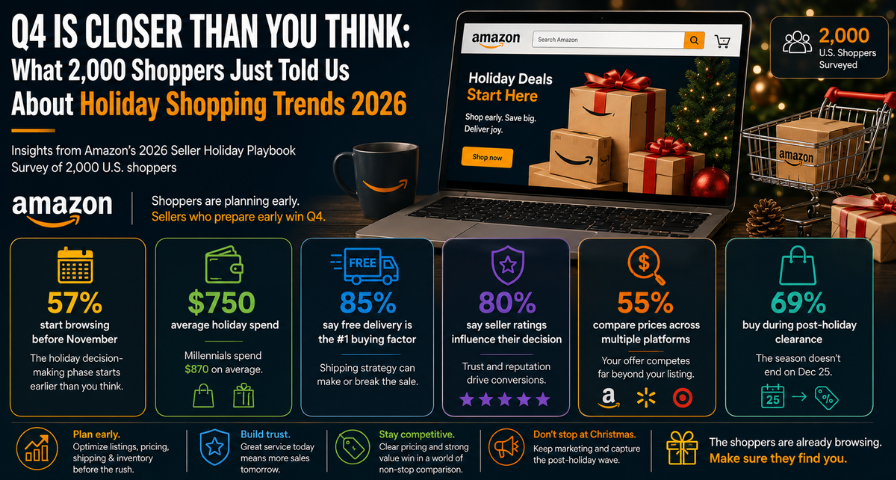
This annual story that retail tells itself is always the same; it's not too late until the holiday rush comes. Every year, it turns out to be a lie. eBay's brand new 2026 Seller Holiday Playbook, based on the survey among 2,000 shoppers in the United States, proves what many sellers have always known but had not seen in numbers yet. The holiday shopping trends 2026 stats give a clear picture of a season starting earlier, involving more comparing and rewarding sellers who were prepared for the rush. If you have an eBay store, a marketplace listing, or maybe some side hustle on eBay, these stats are not just interesting to read.
The Season Starts Before Halloween Candy Is Gone
In this report, there is one statistic that may turn out to be the key one of all: 57 percent of consumers state that they initiate gift shopping in October before it becomes November. It does not seem like an early minority, but actually, the majority of your potential customers have developed their own opinion about different products, services, and sellers while you are just arranging your plans for Black Friday.
During this early shopping process, customers can analyze different products as well as your offers, even without buying anything at once. At the beginning of November, some of them might prefer certain sellers already before they click the "purchase" button. It means that if your listing is not prepared by the beginning of Q4, you do not just miss some part of the holiday season. You miss the period when people make their decisions about what they want to buy during this time of year.
How Much Shoppers Are Actually Spending
As reported by the survey, the typical holiday shopper is intending on spending $750 this year. That's an amount of money that makes a difference in how people are buying their gifts and what sellers can assume about those purchases.
In particular, millennials will be spending more, with a typical $870 budget. That generation, in its prime earnings and gift-buying years, will be buying gifts for their children, parents, significant others, and friends simultaneously. Sellers should therefore allocate extra of their Q4 marketing efforts to appealing specifically to millennials (practical gifts with emotional value). The average of $750 in a holiday budget means that there is some room for discretionary spending, making bundles, tiered pricing, and ready-made gift sets an option for sellers to test across product categories where people buy several items at a time.
Free Delivery Isn't a Perk Anymore
This is one figure that could make sellers rethink their approach to shipping: 85% of consumers report that free delivery is the primary deciding factor in their purchasing decision. Price? Brand loyalty? Product quality? None of these matter as much as free delivery.
In effect, this makes shipping cost an influential aspect of a deal offer, especially in cases where consumers have multiple offers for similar products to compare. Simple economics: for a consumer, an item worth $40 with free shipping will look more appealing than an item worth $35 with an additional cost of $10 for shipping, although the latter would actually be cheaper. And sellers who are yet to include their shipping costs in the price of their product should consider doing that ahead of Q4.
Trust Is Part of the Buying Decision
Second only to free shipping, here’s another figure worth pondering: 80% of buyers indicate that seller ratings affect their purchasing decisions. This is a definite indicator that trust is an integral element of the shopping process, rather than just a nice-to-have factor.
The rating of your store and its customers' comments and reviews do not merely help you build your reputation; they have the power to impact whether a buyer feels confident enough to opt for your product instead of your competitors'. For merchants entering the Q4 season, now is the time to start requesting those reviews from satisfied clients and to address any outstanding customer complaints to prevent bad reviews from being left.
Price Comparison Has Become the Default Behavior
One more number worth considering is 55% of consumers who compare prices on various sites before buying. Those days are long gone when a customer would enter one web site, put a product into the shopping cart and pay for it immediately without any consideration. Today over half of those holiday shoppers compare prices in a proactive way, which means that all your competitors are just a few tabs away.
This does not mean that you have to have the lowest price in every category of products. What this means is that your prices should be justified by something tangible and clearly understandable. You have to have an explanation for why you charge more than your competitors. The justification may include faster delivery, better return conditions, bonuses, additional value, or higher trust based on feedback and customer ratings. Your pricing has to be obvious and justified against competing offers, knowing for sure that your customers are comparing you with your competitors actively.
The Season Doesn't End on December 25th
The most neglected part of this whole report might just be this and 69% of customers purchase in the post-holiday clearance period. There's an enormous amount of holiday sales dollars that are being lost by sellers simply because they have already decided to end the holiday season when Christmas Day is over.
This post-holiday purchasing behavior may result from customers utilizing their gift cards, making purchases for themselves, exchanging their unwanted gifts, or searching for bargains. The sellers that decide to do some post-holiday planning, stock the items that people still need, and continue with their promotions and advertisements till early January can capitalize on these sales.
What This Means for eBay Sellers
Because the above figures are derived straight out of the Seller Holiday Playbook by eBay, it's better to put them into perspective in relation to the marketplace rather than general e-commerce guidance. For eBay, listing quality, competitive pricing, shipping options, seller feedback, and inventory availability operate as one holistic offer to the buyer, not as five different factors. In effect, when a buyer compares two or more listings offering the same product, he or she judges all five in tandem, usually in a matter of seconds. This way, an effective Q4 e-commerce strategy does not involve optimizing any single factor but making sure that your pricing, shipping, feedback rating, and inventory levels complement each other, particularly during the initial browsing month of October.
What This Means Heading Into Q4
These statistics paint a pretty clear picture overall. Holiday shopping trends 2026 indicate that the season begins earlier, is very much about trust and transparency, and goes far beyond what many retailers would consider its ending point. Customers browse products in October, compare prices and availability between different platforms, value their seller ratings equally with the price, and use free delivery as one of their primary purchase drivers. And after the packages are wrapped up, a great portion of them continue shopping.
There is nothing complex about it for retailers, although the task of implementation will require certain effort. Have everything from listings to pricing strategy and logistics sorted out before November. Treat your seller reputation as an active asset, rather than some kind of score that stays there forever. Your pricing should be able to compete with the customer that compares you with three other vendors. And do not close down your holiday sales channel right away after December 25, because a considerable percentage of your buyers are still in the game.
Quarter four is approaching faster than it seems, but only the eBay sellers and ecommerce businesses that pay attention to these numbers now will be prepared for it.
Ready to Grow on Amazon?
Let our experts help you scale your Amazon business with proven strategies.
Get a Free Consultation